Community, Heritage and Identity: Behind The Iconic Aran Knit
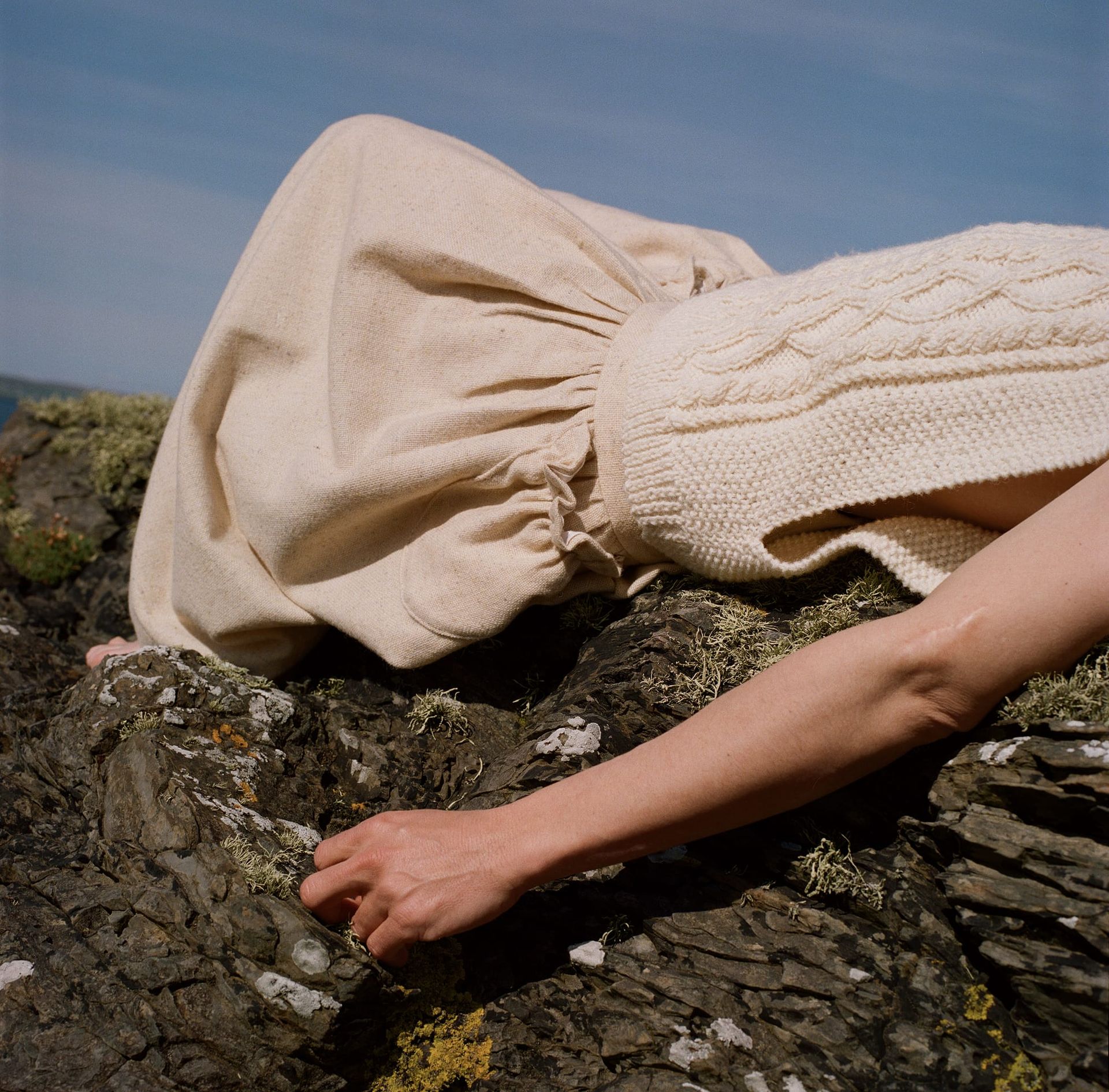
The Aran knit is synonymous with the islands it gets its name from. We explored the fascinating history, exciting revival and enduring appeal of the iconic Irish jumper.
The jumper known around the globe
In author Vawn Corrigan’s book Irish Aran: History, Tradition, Fashion (O’Brien Press, €12.99), she describes the Aran jumper as a “tangible symbol of Irishness recognised the world over”. “Arans seem to inhabit a timeless space,” she writes. “The designs live on as though they had been carved into the country itself.”
The Aran knit, with its origins in the islands of Inis Oírr, Inis Meáin and Inis Mór, is thought to have developed as we know it sometime between the late 1800s and early 1900s. Though theories persist (most notably of family patterns designed to help recognise the bodies of fishermen drowned at sea) no one is precisely sure of the origins of Aran patterns as prior to their emergence the men of the islands traditionally wore plain knitted jumpers in grey or indigo blue rather than the iconic cable knit.
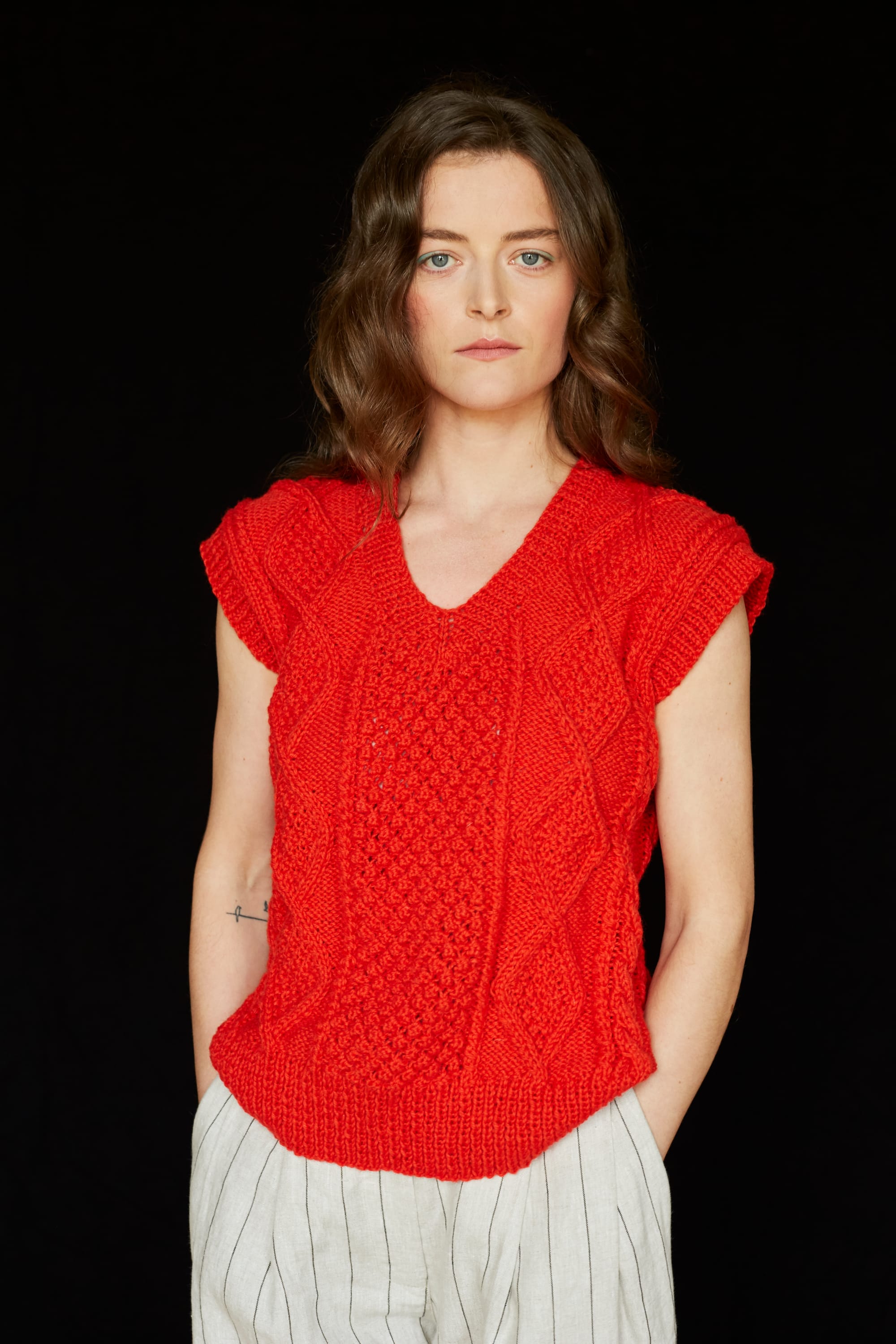
We do know, however, that Aran patterns were highly individual, very creative and often passed down through generations of knitters with stitches retained in memory, leaving plenty of space for creativity and innovation when it came to design. Aran sweaters, particularly the handknit versions, are characterised by a distinctive 3D effect – the result of patterns of raised stitches, most commonly cables, honeycomb and diamond stitches.
There are, however, many additional stitches, including bobbles, zigzags, twist stitches, moss stitches and the much-loved blackberry stitch or Trinity knot, which cannot be replicated by machine and is seen to represent either natural abundance or is imbued with religious significance.
From the needle to the big screen
Muriel Gahan founded The Country Shop in Dublin in the 1930s and is often credited with elevating the status of the Aran at home and abroad as well as providing an income to many Aran Island knitters over the years. Similarly, Ó’Máille’s Original House of Style in Galway city, which opened in 1938, famously tailoring costumes for The Quiet Man, was a pivotal business in the elevation of the west of Ireland craft.
Meanwhile, Frances Beatty’s 47-year-old Inis Mór shop An Púcán has become renowned the world over for its hand-knitted Arans. “Aran has an extraordinary ability to be refashioned in many ways and yet retain its appeal as a simple classic. It manages to straddle both the traditional and the modern,” writes Vawn Corrigan.
And this is indeed true. In 2017 an Aran sweater dating from the 1940s made its way from Mayo’s Museum of Country Life to New York’s Museum of Modern Art (MoMA) to appear alongside more than 100 other items including the Breton shirt, ‘Little Black Dress’ and a classic leather biker jacket in the exhibition Is Fashion Modern?
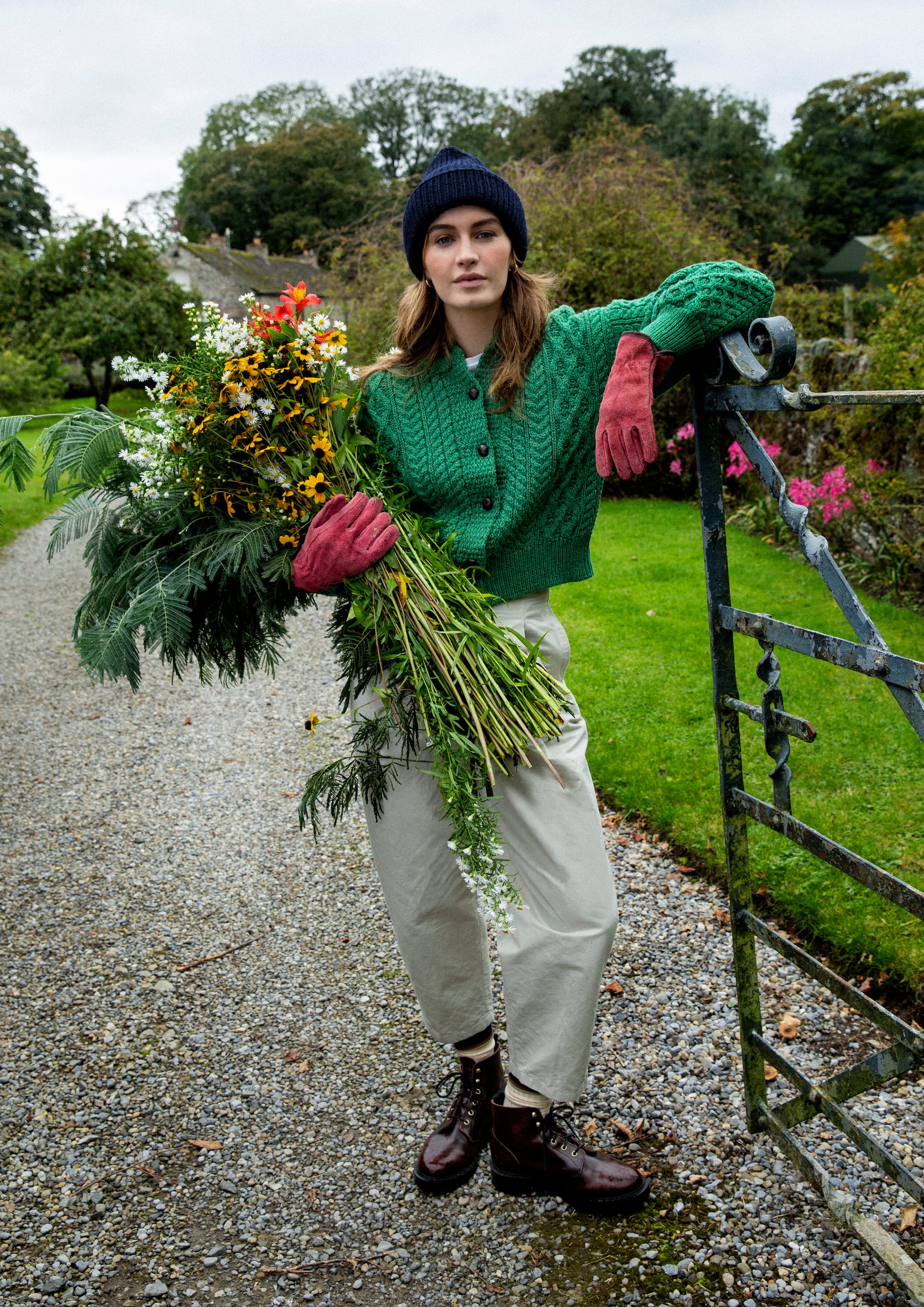
From its origins as a simple white woollen jumper or ‘báinín geansaí’ designed and crafted for the men and boys of the Aran islands, the Aran sweater or cable knit jumper is now ubiquitous and available across every high street. Variations on the form regularly appear in designer collections from Ralph Lauren to Tommy Hilfiger (the Americans having a particular grá for the form) and have featured on the catwalks of Marc Jacobs, Burberry, Jean Paul Gautier and Irish designer Jonathan Anderson, for whom Donegal knitting royalty Rosaleen Hegarty of Crana Knits has designed and knitted.
No stranger to the silver screen either, Aran sweaters have appeared in film and television productions from Ryan’s Daughter to Jaws, Knives Out to Peaky Blinders. Sharon Horgan’s Bad Sisters recently saw costume designer Camille Benda feature the Clover cropped Aran cardigan by IrelandsEye, which sparked a surge in sales for the company earlier this year.
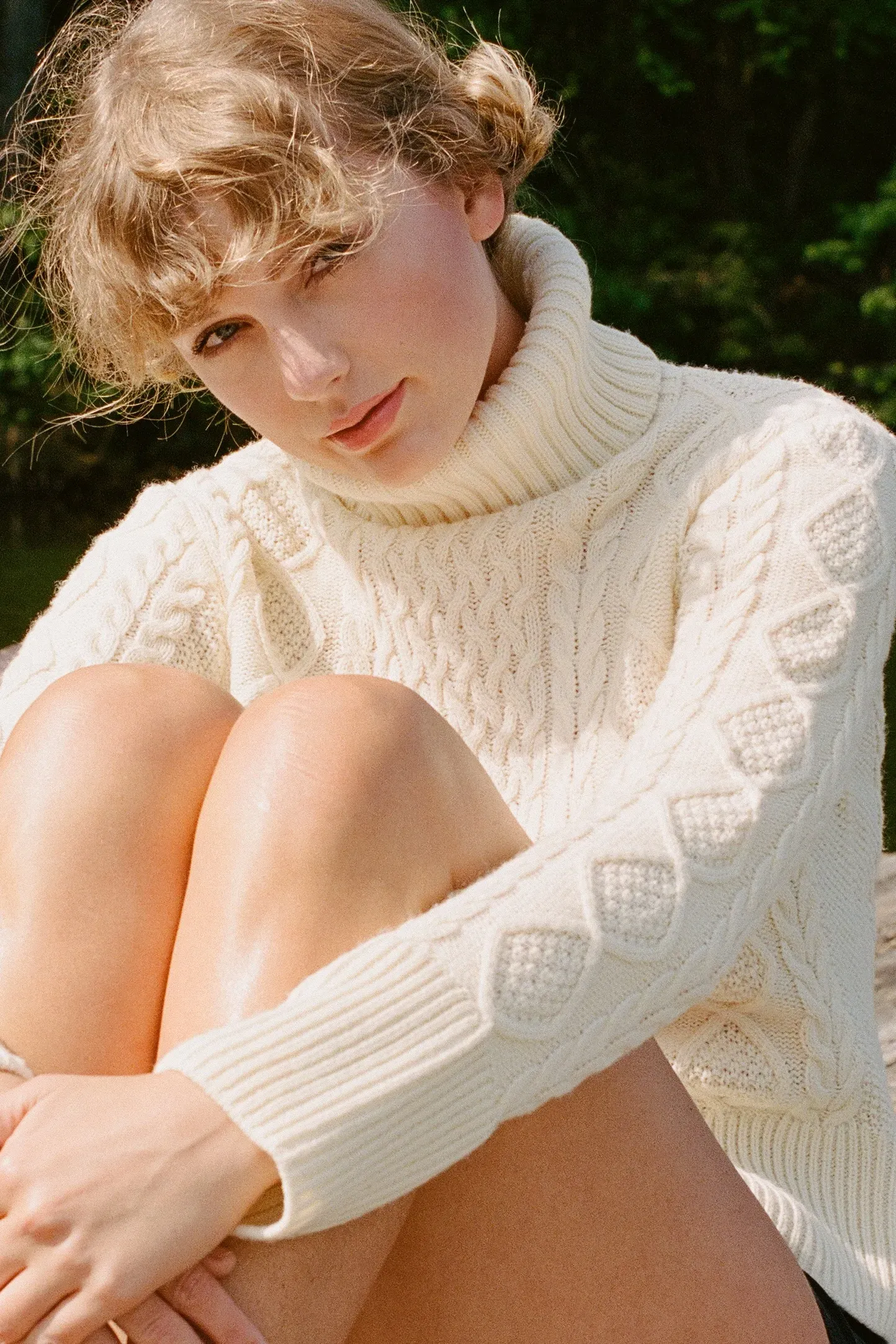
It’s a style that has long had famous devotees too – from the Clancy Brothers to Steve McQueen, Grace Kelly to Taylor Swift who famously wore an Aran style cable knit sweater for the release of her 2000 Folklore album.
Adding a new twist on a classic
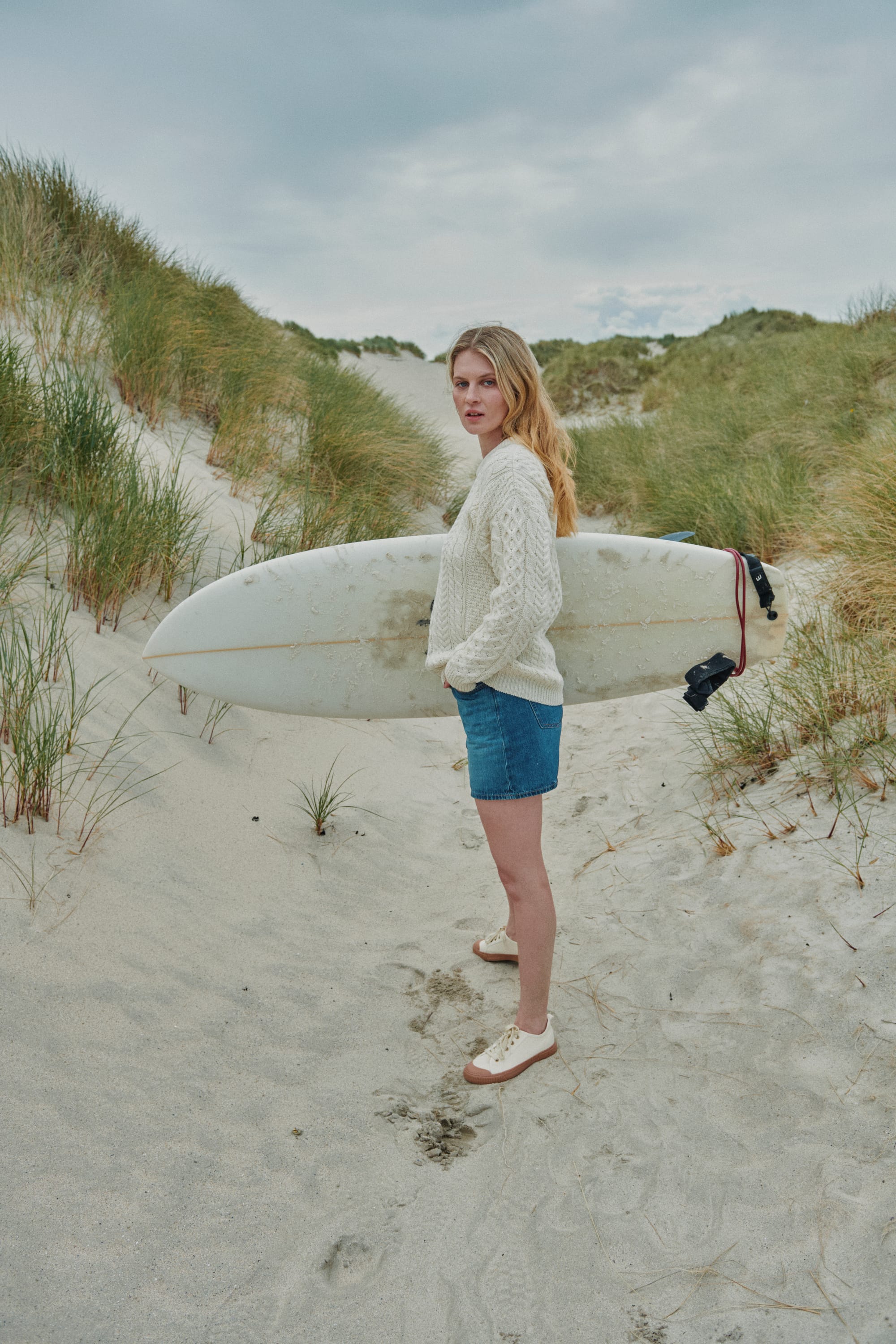
“The Aran knit endures as both an iconic practical and aesthetic design – its positioning in contemporary culture continuing to resonate by connecting us to community, heritage and identity,” says fashion stylist and creative consultant Aisling Farinella. She says that it’s easy to understand the appeal of the Aran to a global audience – in particular to members of the Irish diaspora – but it is the recent resurgence of interest in the Aran from a new generation of Irish designers that has caught her attention.
“London-based, menswear designer Robyn Lynch integrates Aran knitwear into sportswear-inspired pieces – assembling knitted panels with tracksuit tops and technical outerwear. Simone Rocha, revered for her distinctive aesthetic, drew directly from the storytelling of the Aran in her AW20 collection Riders To The Sea, designing her own unique ‘family stitch’ which was then applied to deconstructed Aran pieces, embellished with pearls and imbued with resilience, longing and loss,” she says.
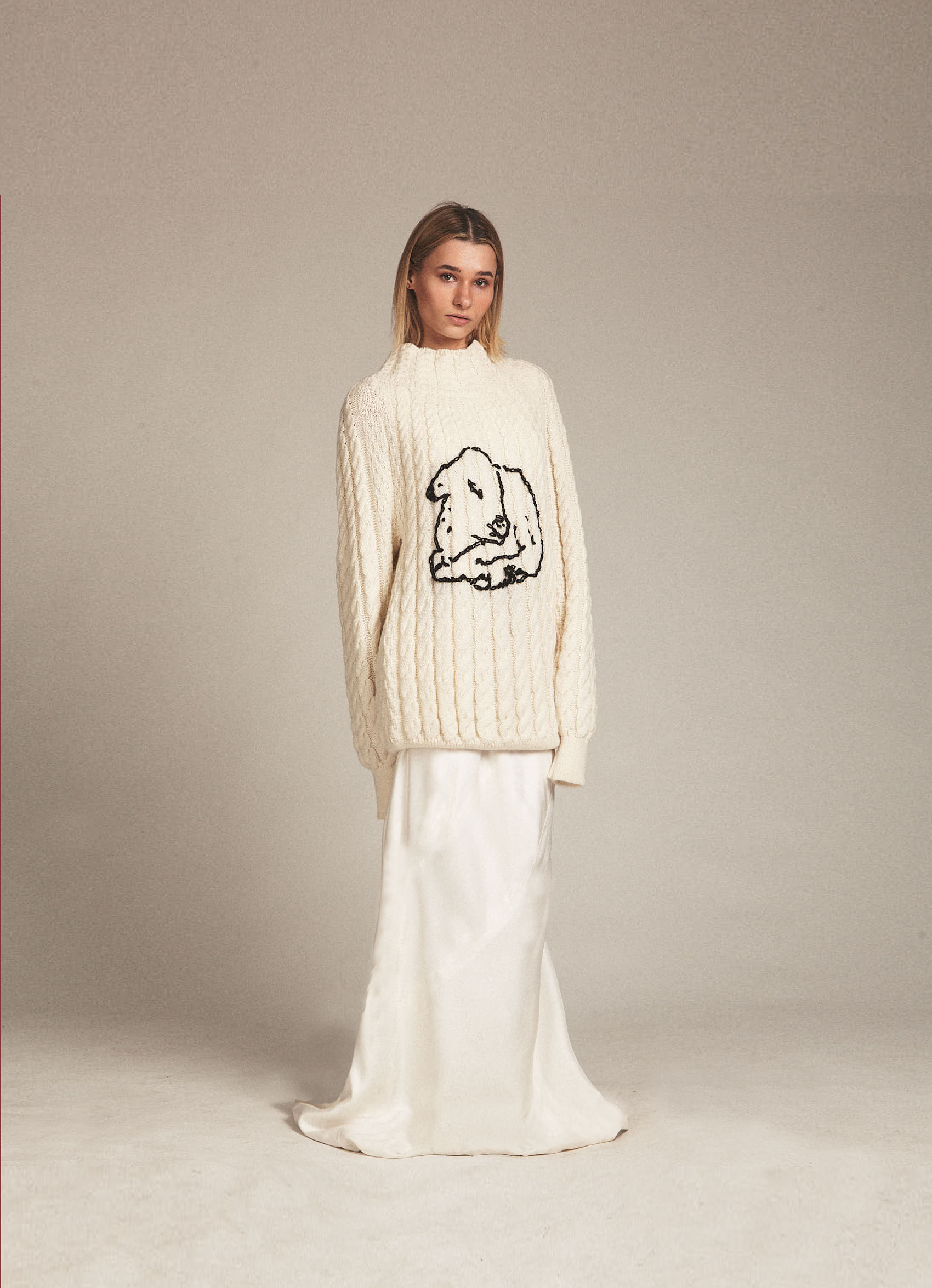
Sasha Donnellan is a young designer based between Westport and Switzerland. Having studied womenswear at Esmod Paris, Donnellan’s graduate collection fuses elements of bridalwear, military attire and Aran knit details and plays with the silhouette and texture of the classic Aran jumper.
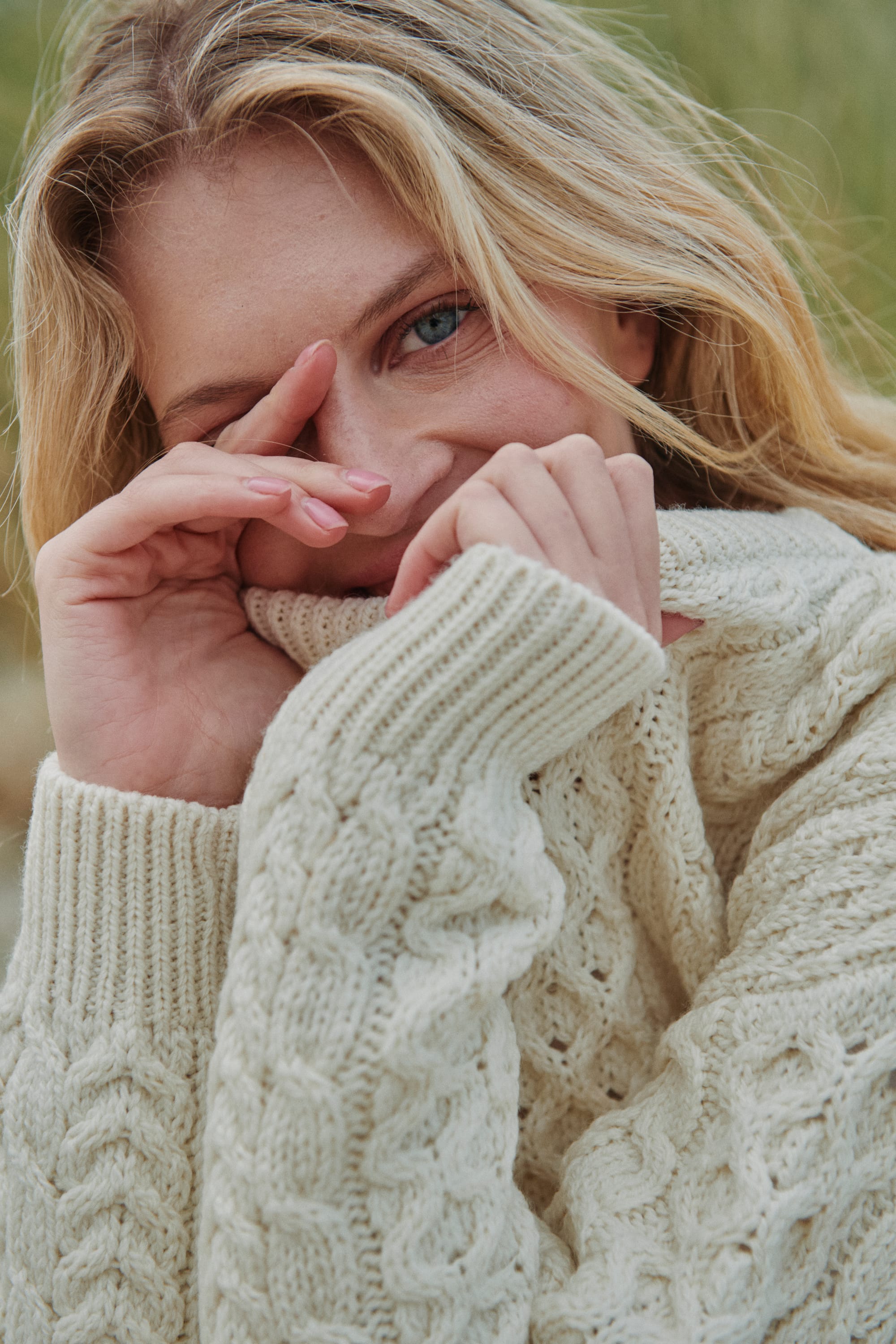
“The Aran jumper has always been a symbol of Irish identity, craft and resilience. It reminds me deeply of my childhood growing up in the west of Ireland, where my parents would buy me beautiful Aran knits from Achill and Kylemore Abbey,” says Donnellan.
“It was essential for me to include the Aran in my collection – not only in keeping with the theme but also as a personal ode to myself. My Aran sweaters, made in collaboration with Aran Woollen Mills, reimagine traditional designs by having them chain-knitted on the front in a graphic, contemporary way. Many young Irish people are proud of their heritage and want to showcase it, so I wanted to create a product that honoured tradition while also being a conversation starter.”
What makes ‘a good Aran’
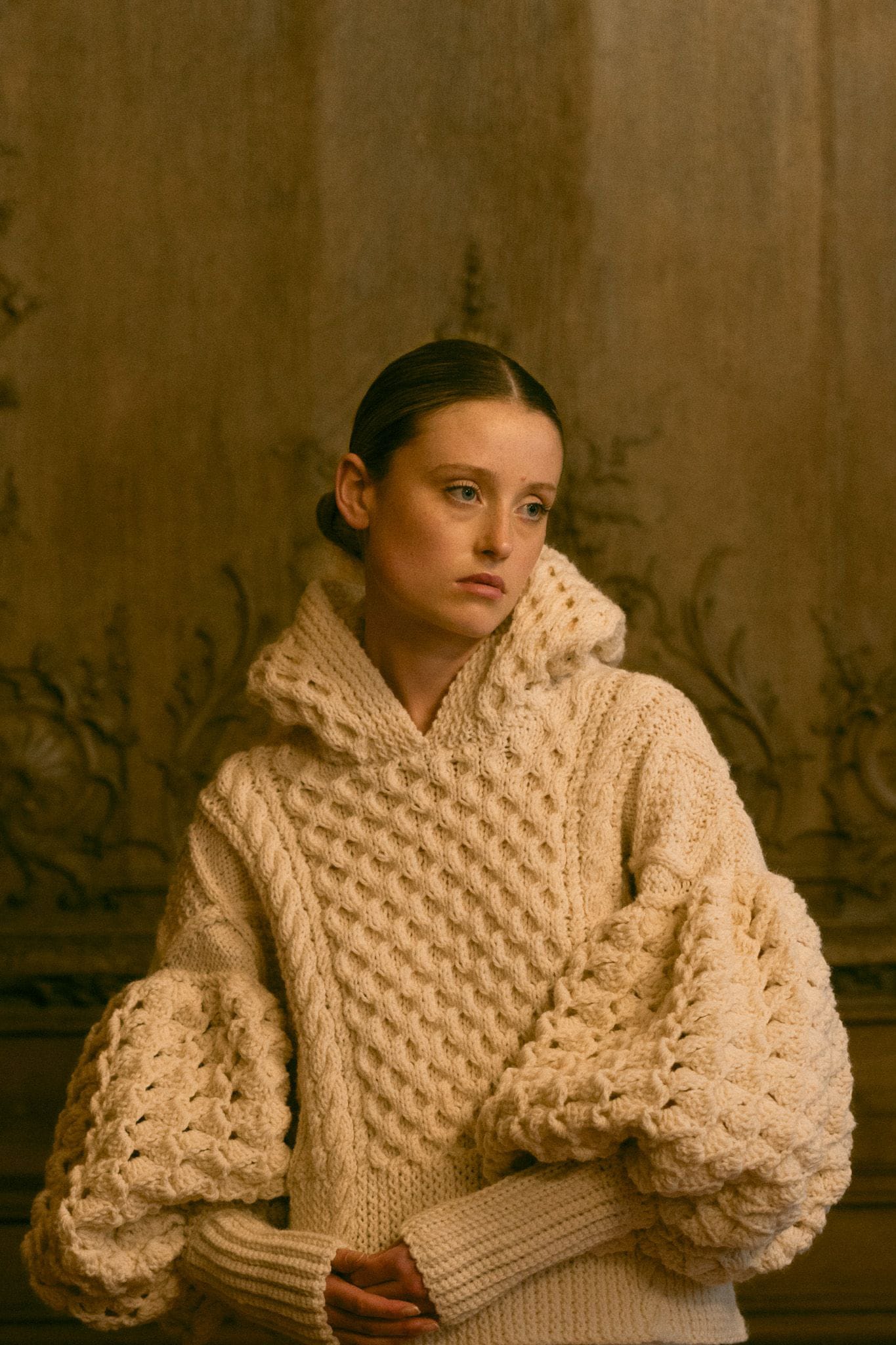
One such creative is London-based barber Lynn Hayden Cassidy, grooming ambassador with Dior, who speaks passionately about her love of the Aran on the Desert Island Dress podcast. Speaking about wearing her grandfather’s Aran on the streets of London and Paris, Cassidy says: “Any Irish person knows what a good Aran means. This one is a little bit baggy – which I like. I can put shirts underneath it, I can dress it up or dress it down… you feel so wholesome in a good Aran.”
Back at home there are plenty of brands playing with the traditional Aran - whether through silhouette, material or colour. The Tweed Project designs timeless linen and tweed garments as well as Aran jumpers and cardigans handmade in Galway with a contemporary edge through being sleeveless, embellished with tassels or featuring oversized armholes perfect for layering over tops or dresses.
“Our passion for the Aran is a passion for the essence of Irish design and heritage epitomised by the unique Irishness of the classic Aran made sleeveless for ease of wearing,” they tell me. “Our Arans are all hand-knitted by our knitter Kathleen, who is from Inis Mór, with no compromise on the tradition. They are rooted in practical simplicity. There is no comparison between a hand-knitted Aran and a machine knitted Aran in our opinion – even someone with an untrained eye will know a handknit Aran by the depth and ‘realness’ of the stitch.”
They describe the feel and touch of a handknit Aran as producing a ‘wow moment’ - something to be found in the work of designer and knitter Edel MacBride who is a passionate advocate for Aran made by hand in Donegal wool or in the miniature versions of Aran for children by Snugaí Babóg that make us want to shrink down to size.
Keeping it close to home
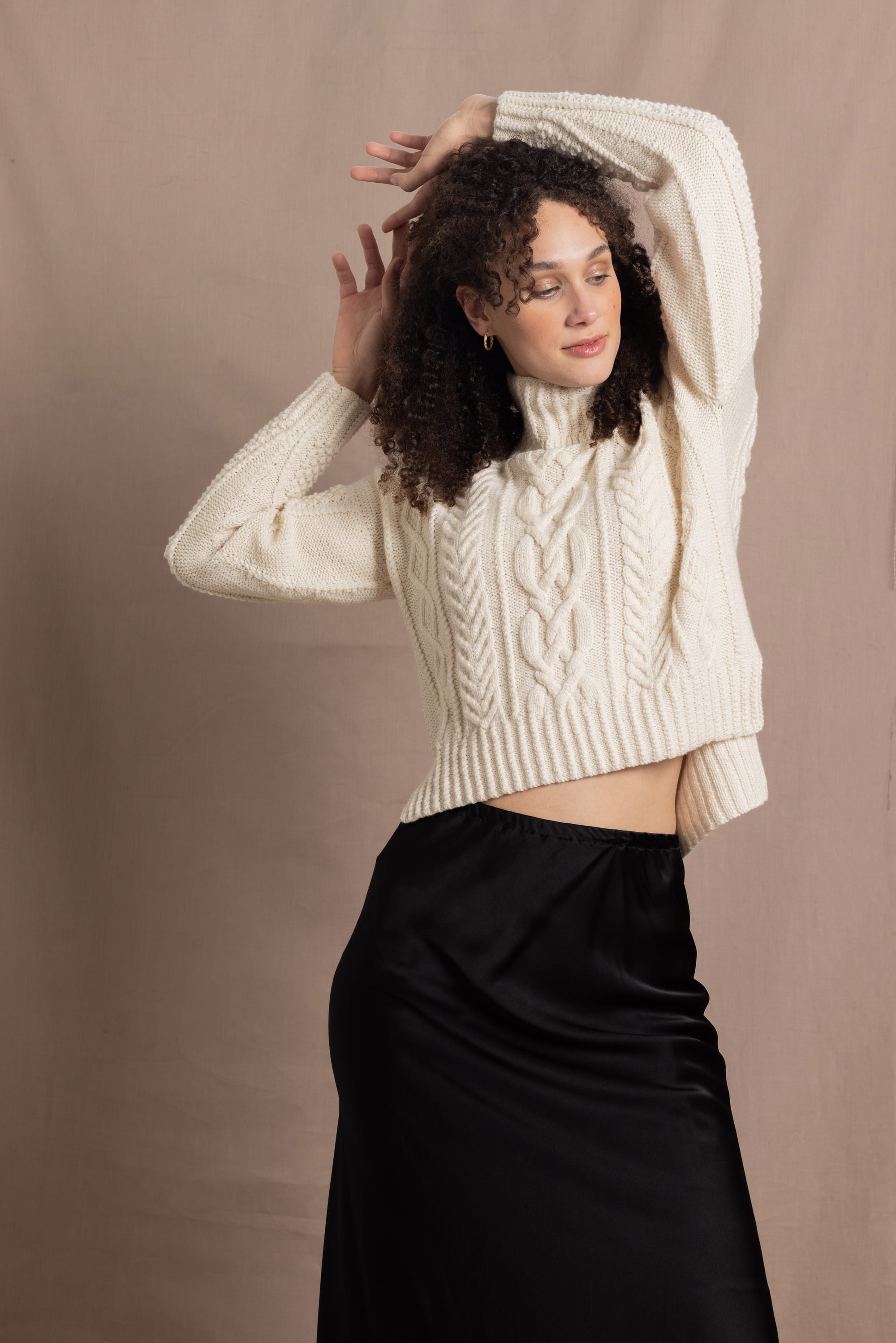
Over at Madigan Cashmere, founder Elaine Madigan wanted to create an homage to the tradition inspired by a hand-knitted Aran her daughter had received as a wedding gift. “We wanted to make this our own by recreating the Aran sweater in the material we know best - luxurious, soft cashmere - putting a luxurious spin on this icon of Irish design,” she says.
“Our customers share a deep appreciation for the tradition and craftsmanship that goes into each piece and understand that the best things take time. As each Madigan Aran sweater is handknit in Ireland, they can take up to six weeks to complete but our customers say they are worth the wait. We have a talented team of ladies who have been preserving this tradition with years of practice, many of whom learned these skills from their own mothers and theirs before them. One of our wonderful knitters, Eileen, actually hails from Galway herself.”
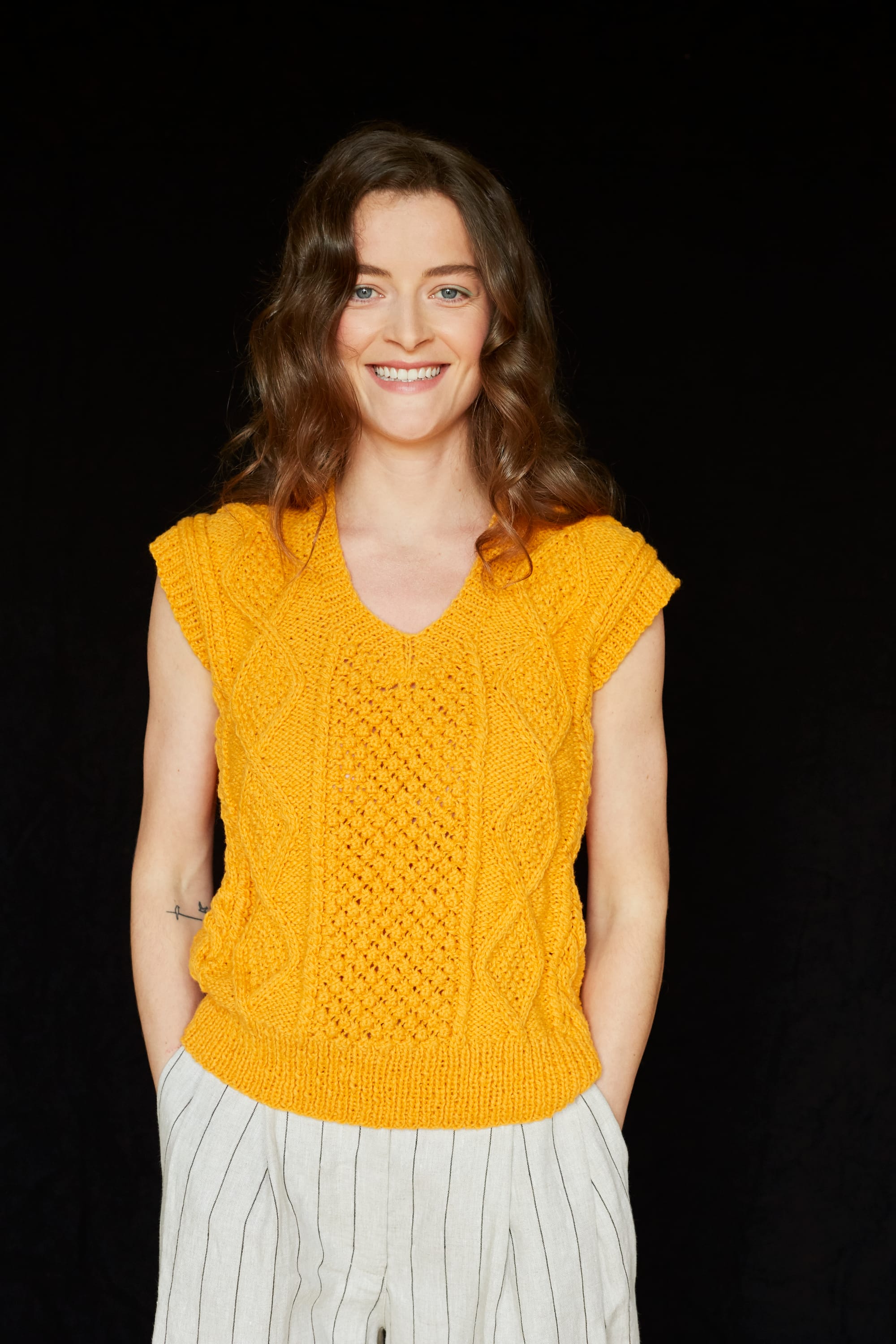
Far from the original Aran jumpers knit from coarse ‘bainín’ wool, modern iterations are often designed in finer, more luxurious yarns. At Stable of Ireland the product offering has developed in response to the customer.
“Many of our customers are travelling with smaller luggage options, living in warmer countries and preferring lighter, wearable layers,” say founders Sonia Reynolds and Francie Duff. “We use a finer wool, have designed a slimmer shape and have requested from our knitters a looser stitch so that our handknit sweater vest is still pure ‘Aran’ but perfect for wearing regardless of temperature or individual style.”
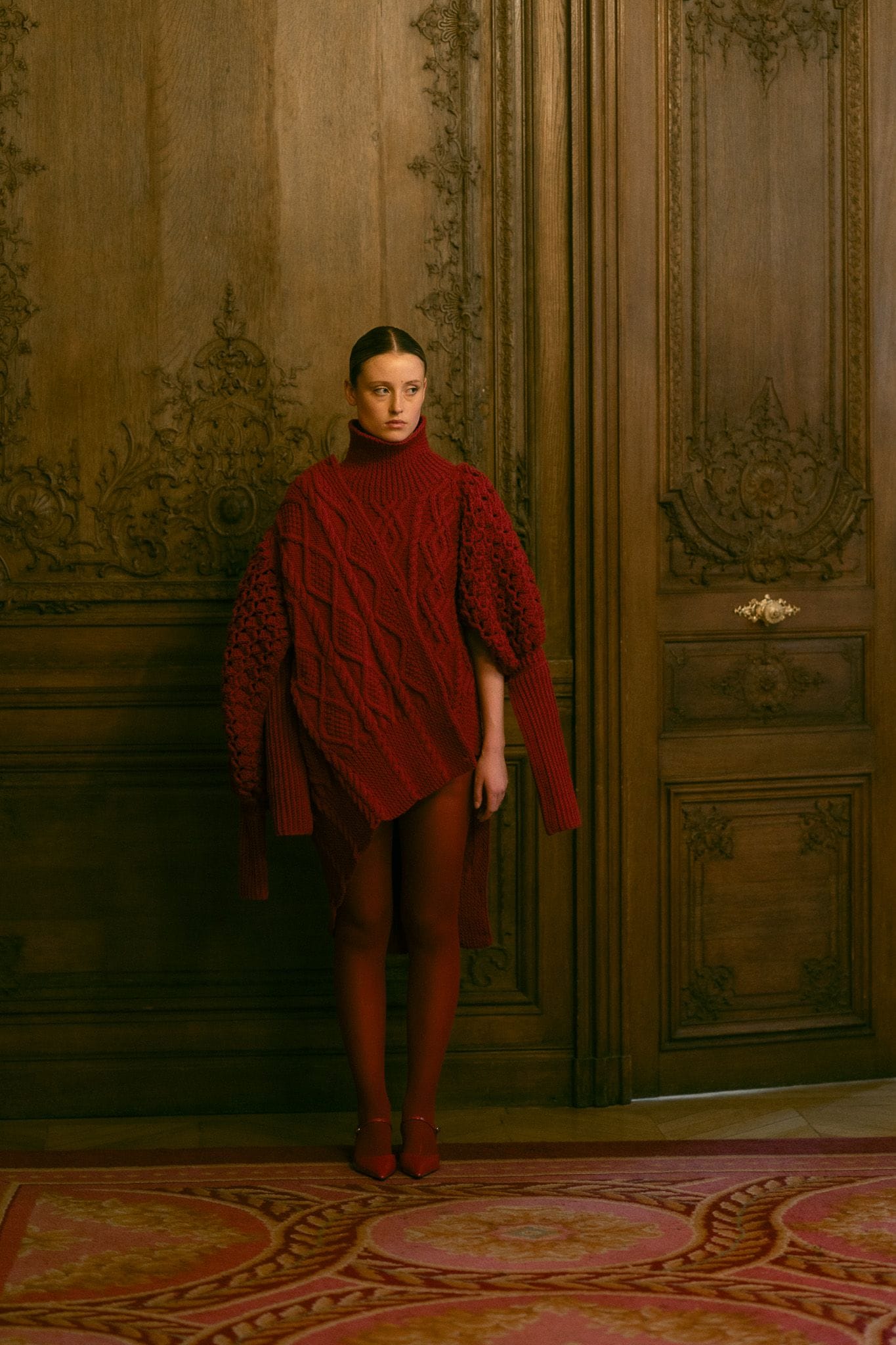
If Stable has gone smaller and lighter then Galway-based designer Colin Burke has done the opposite, creating sculptural, voluminous garments that are truly breathtaking. “Colin Burke is noteworthy in his role in both preserving and advancing the declining skills of hand-knitting and in reconfiguring complex Aran patterns into contemporary silhouettes,” says Aisling Farinella.
“Burke’s pieces are to be considered not only desirable pieces of luxury fashion but sculptural forms of contemporary Irish design.”
Delivered straight to your inbox every month.